
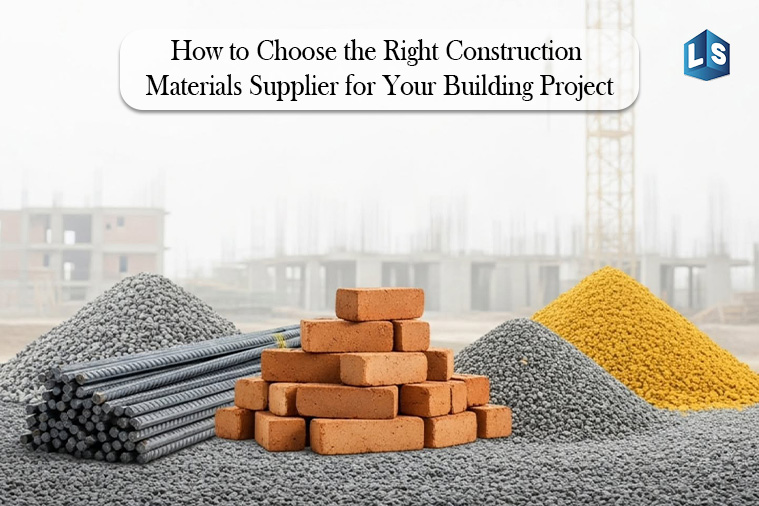
Every building project in Qatar – whether a luxury villa in Al Wakrah, a commercial tower in West Bay, or a retail complex in Lusail – depends on one foundational decision: who supplies your materials. Choosing the right construction materials supplier in Qatar goes far beyond comparing price lists. It shapes structural integrity, regulatory compliance, delivery schedules, and the long-term value of your asset. This guide gives contractors, developers, architects, procurement teams, and homeowners a practical framework for making that decision with confidence.
Why Supplier Selection Directly Impacts Your Project
In Qatar’s construction sector, a poor supplier choice rarely surfaces immediately. The consequences tend to appear during site inspections, handover, or within the first few years of occupation – when rectification costs far exceed any initial procurement saving.
The risks associated with an unreliable supplier include:
- Structural deficiencies from substandard or non-compliant materials
- Regulatory rejection under Qatar Construction Specifications (QCS 2014) or Gulf Standardisation Organisation (GSO) standards
- Programme delays caused by out-of-stock items or failed customs clearance
- Accelerated material degradation due to climate unsuitability
- Budget overruns from emergency replacements and rework
Understanding these risks is the first step toward choosing a supplier who genuinely supports your project goals rather than just fulfilling an order.
Comparing Supplier Types: General vs. Specialised
Not every supplier is positioned to serve the same project demands. The table below illustrates how general local stockists compare against specialised construction materials suppliers on key procurement criteria.
| Evaluation Criteria | General Local Suppliers | Specialised Suppliers |
| Product Variety | Limited, commodity focus | Broad, including premium/engineered |
| Quality Assurance | Variable, undocumented | Certified, test-report backed |
| Technical Expertise | Minimal | Application consultants available |
| Delivery Reliability | Inconsistent | Programme-aligned logistics |
| Compliance Support | Rarely provided | QCS, GSO, ISO guidance included |
| Long-Term Value | Low upfront, higher risk | Higher investment, lower lifecycle cost |
For large-scale residential developments, hospitality projects, or commercial fit-outs in Qatar, a specialised supplier’s ability to provide certified products, technical guidance, and logistics coordination consistently outweighs a lower unit price from a general stockist.
How to Evaluate Supplier Credibility and Compliance
Verify Certifications and Standards Compliance
Any credible construction materials supplier should be able to provide product certifications on request. Look for ISO certification, CE marking, GSO conformity, or specific QCS compliance documentation. For structural, MEP, and façade materials, ask for independent test reports – not just supplier declarations.
Check Their Qatar and GCC Project Track Record
A supplier with documented experience delivering to Qatar’s infrastructure, hospitality, or residential sectors carries measurably less risk than one entering the market. Request a reference list and, where possible, contact previous project managers or procurement leads for direct feedback.
Assess Technical Documentation Quality
Reliable suppliers provide Material Safety Data Sheets (MSDS), installation guides, and full technical datasheets without delay. If a supplier struggles to produce documentation, that gap in transparency is itself a disqualifying signal.
When specifying interior finishes, for example, sourcing high-quality kitchen sink materials from a verified supplier ensures consistent finish quality, drainage performance, and material durability aligned with your project specifications.
Logistics, Stock Availability, and Import Capability
Construction programmes in Qatar move quickly, particularly on government-linked or developer-driven projects. A supplier’s logistics capability must be evaluated with the same rigour as their product range.
Key logistics questions to ask before finalising any supplier:
- Can you fulfil the required quantities from in-country stock, or will this trigger international lead times?
- Do you manage import documentation, Ashghal submittals, or Kahramaa-related approvals for your product categories?
- Can you schedule phased deliveries that align with the construction programme rather than requiring bulk site storage?
- What is your contingency process if a product line is delayed at customs or goes out of stock mid-project?
Supply chain disruptions are among the most common programme-critical issues on Qatar construction projects. A supplier who cannot answer these questions with documented processes is a supply risk.
Pricing Transparency and Total Cost of Ownership
Experienced procurement teams in Qatar evaluate total cost of ownership – not just the unit price on a quotation. A cheaper material that fails a QA inspection, corrodes prematurely, or requires early replacement will cost significantly more over the project lifecycle.
When comparing supplier quotations, assess:
- Whether pricing is fully itemised, including freight, customs duties, and site delivery
- Payment terms and credit facilities relative to project cash flow cycles
- Warranty coverage, duration, and the supplier’s process for honouring claims
- The risk cost of single-source dependency for critical materials
Always request at least two to three itemised quotations from vetted suppliers before committing. Transparency in pricing is itself a proxy for supplier professionalism.
Qatar’s Climate Conditions and Material Selection
Qatar’s environment is one of the most demanding in the world for construction materials. Temperatures exceeding 45°C, intense UV radiation, high ambient humidity, and coastal salt exposure create conditions that accelerate material failure when unsuitable products are specified.
Materials used in Qatar projects must demonstrate:
- Thermal resistance: exterior cladding, insulation, and roofing systems must manage extreme diurnal temperature variation
- UV stability: sealants, polymers, and paints degrade rapidly without UV-stabilised formulations
- Corrosion resistance: marine-grade stainless steel and treated aluminium are standard for coastal and seaside developments
- Acoustic performance: high-density residential and mixed-use developments benefit from specialist solutions such as soundproofing accessories for acoustic comfort, which support habitability standards in Qatar’s urban environment
- Landscaping durability: outdoor materials in Qatar require documented heat and UV resistance. Products such as natural decorative stone pebbles for landscaping combine aesthetic quality with the structural durability suited to Qatar’s residential and hospitality outdoor environments
Always request documented climate performance data from your supplier – particularly for materials imported from temperate climates where GCC-specific testing may not have been conducted.
Technical Support for Architects, Contractors, and Developers
Beyond product supply, a high-performing supplier functions as a procurement partner throughout the project lifecycle. Evaluate whether prospective suppliers can offer:
- Shop drawing and submittal preparation to support engineer approval processes
- On-site technical assistance during installation of specialist or complex materials
- Post-handover maintenance guidance to protect long-term asset value
- Responsive after-sales support with defined SLAs for replacement and warranty claims
This level of service is particularly relevant for large projects managing multiple material categories across MEP, structural, finishes, and external works simultaneously.
Common Mistakes to Avoid When Selecting a Supplier
Even experienced procurement professionals make avoidable errors under programme pressure. The most common mistakes in Qatar construction procurement include:
- Awarding on unit price alone without comparing total lifecycle cost
- Accepting supplier assurances without requesting independent certification documentation
- Failing to confirm local stock depth before scheduling programme-critical deliveries
- Specifying imported materials without verifying climate performance data for GCC conditions
- Relying on a single supplier for critical materials without a confirmed backup source
These mistakes compound during project execution. The cost of preventing them during procurement is a fraction of the cost of correcting them on site.
Key Factors Checklist Before Finalising a Supplier
Use this checklist during your supplier evaluation process before committing to any supply agreement:
- Product certifications verified (ISO, GSO, QCS 2014 compliance)
- Technical datasheets and test reports provided on request
- Local inventory availability confirmed for required quantities
- Import capability and customs documentation process confirmed
- Climate suitability of materials verified for Qatar conditions
- Pricing is fully itemised including freight, duties, and delivery
- Warranty terms documented in writing before order placement
- Reference projects in Qatar or GCC confirmed and contactable
- After-sales and technical support scope agreed upfront
- Backup supply source identified for critical long-lead items
Conclusion
In Qatar’s construction sector, your supplier network is a direct determinant of project quality, compliance, and long-term asset performance. The right partner goes beyond fulfilling orders – they provide verified products, reliable logistics, technical expertise, and the kind of after-sales support that protects your project long after handover.
Whether you are planning a residential development, commercial fit-out, hospitality project, or infrastructure delivery in Qatar, partnering with a credible construction materials supplier Qatar ensures your procurement decisions are built on quality, compliance, and genuine long-term value rather than the lowest price on a quotation.
Frequently Asked Questions
Q1. What standards should construction materials meet in Qatar?
Materials used in Qatar construction projects must comply with the Qatar Construction Specifications (QCS 2014), Gulf Standardisation Organisation (GSO) standards, and internationally recognised certifications such as ISO or CE where locally applicable. Always request documentation confirming conformity before placing orders.
Q2. How do I verify whether a supplier is reliable for a large project in Qatar?
Request a reference list of completed projects in Qatar or the GCC, confirm in-country stock levels, review their import and logistics capability, and verify that certified technical documentation is available for each product category. Direct feedback from previous project managers is the most reliable indicator..
Q3. Why is the cheapest supplier rarely the best choice for construction projects?
Low-cost materials that fail QA inspection, require premature replacement, or fall short of QCS compliance generate costs that far exceed initial procurement savings. Total cost of ownership – including installation, maintenance, replacement, and warranty – is the correct metric for supplier evaluation in Qatar’s demanding construction environment.
Q4. How does Qatar’s climate affect construction material selection?
Qatar’s extreme heat, UV intensity, high humidity, and coastal salt exposure require materials with documented thermal resistance, UV stability, corrosion resistance, and moisture tolerance. Products specified for temperate climates frequently underperform without GCC-specific testing and certification. Always request climate performance data before specifying imported materials..
Q5. What should be included in a supplier evaluation process for building projects in Qatar?
A thorough evaluation should cover product certifications, technical documentation quality, local inventory availability, import and logistics capability, climate suitability testing, pricing transparency, warranty terms, Qatar/GCC project references, after-sales support scope, and backup supply options. A structured checklist applied consistently across candidate suppliers reduces procurement risk significantly.